What changed
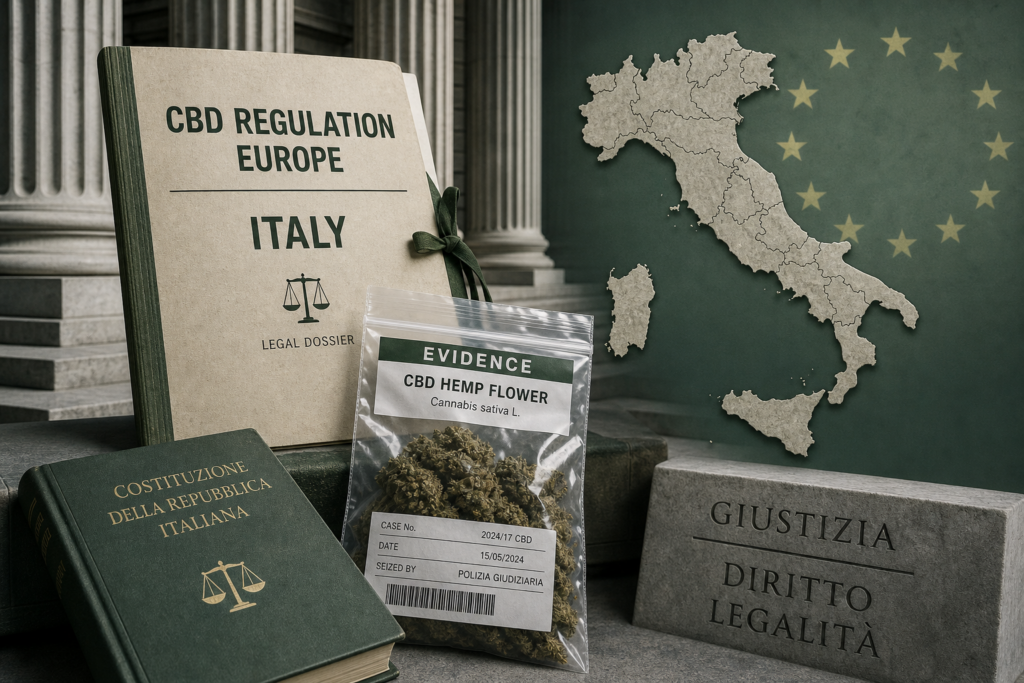
Italy’s 2025 security decree moved hemp inflorescences and flower-derived products much closer to narcotics law through Article 18. Since then, municipalities across the political spectrum have ordered retailers to stop selling “cannabis light” flowers and related products.
In June 2026, two regional administrative courts pushed back. On 11 June, the Regional Administrative Tribunal (TAR) of Liguria suspended a Ventimiglia order that had forced a retailer to stop selling hemp flowers and derivatives through vending machines. The municipality had argued Article 18 applied immediately and that psychoactive assessment was unnecessary. The court disagreed and said immediate closure could cause “grave and irreparable” harm to the business.
On 17 June, the TAR of Lombardy suspended proceedings in a similar Nova Milanese case and said it would wait for guidance from the Court of Justice of the European Union (CJEU) or Italy’s Constitutional Court before a final ruling. The shop owner had already closed before the court acted.
In September 2026, the Italian Council of State extended this judicial protection by suspending the Ministry of Health’s oral CBD decree and referring the case to the EU Court of Justice. Read our full coverage on the Italian Council of State oral CBD CJEU referral.
What it means for buyers in Italy
- Flowers are not uniformly banned on the ground: Some shops continue trading under court protection; others have shut after municipal enforcement.
- Proof matters: Lawyer Lorenzo Simonetti, who represented the Ventimiglia retailer, said criminal case law requires concrete evidence of psychoactive effect before banning “cannabis light” sales. Administrative judges are now echoing that line.
- Oils and edibles are a separate risk: Flower court wins do not cancel Italy’s broader squeeze on inflorescence-linked products or EU novel food uncertainty for ingestible CBD.
- Do not assume one ruling covers your city: Mayors from both right and left have signed closure orders. Enforcement remains local and uneven.
What comes next
A Constitutional Court hearing is scheduled for 21 October 2026. That date is widely seen as pivotal for the legal status of hemp flowers in Italy. Trade body Canapa Sativa Italia welcomed the Liguria ruling and repeated its position that Article 18 alone cannot dismantle the legal hemp supply chain and that a flower by itself does not automatically constitute an offence.
Lawyer Giacomo Bulleri noted that hostility to hemp retail crosses party lines, even where regional governments from different camps have challenged the national ban in court. For shoppers, the practical map is still city-by-city until the Constitutional Court and possibly the CJEU settle the framework.
Context for EU buyers
Italy is not France’s Novel Food edibles crackdown and not the Netherlands’ Opiumwet debate. The live fight here is whether low-THC hemp flowers can be sold at retail after Article 18. That makes Italy one of the highest-uncertainty flower markets in Europe in 2026, even when courts side with sellers.
Sources
Related guides
Disclaimer: This is news context for shoppers, not legal or medical advice. Italy’s hemp rules are moving through courts and municipalities. Check current official guidance before you buy, sell, or import CBD flowers.
FAQ
Are CBD flowers legal in Italy in 2026?
The legal picture is fragmented. Article 18 restricts hemp flowers nationally, but regional courts suspended some municipal closure orders in June 2026. Some shops still trade under court protection; others have closed.
What is Article 18 of Italy's security decree?
Article 18 is the 2025 measure that moved hemp inflorescences and flower-derived products closer to narcotics law. Municipalities have used it to order shop closures, but courts are now questioning immediate enforcement without psychoactive proof.
When will Italy decide the flower question?
Italy's Constitutional Court has a hearing set for 21 October 2026. The Lombardy TAR is also waiting for CJEU or Constitutional Court guidance before a final ruling in at least one retailer case.