What changed
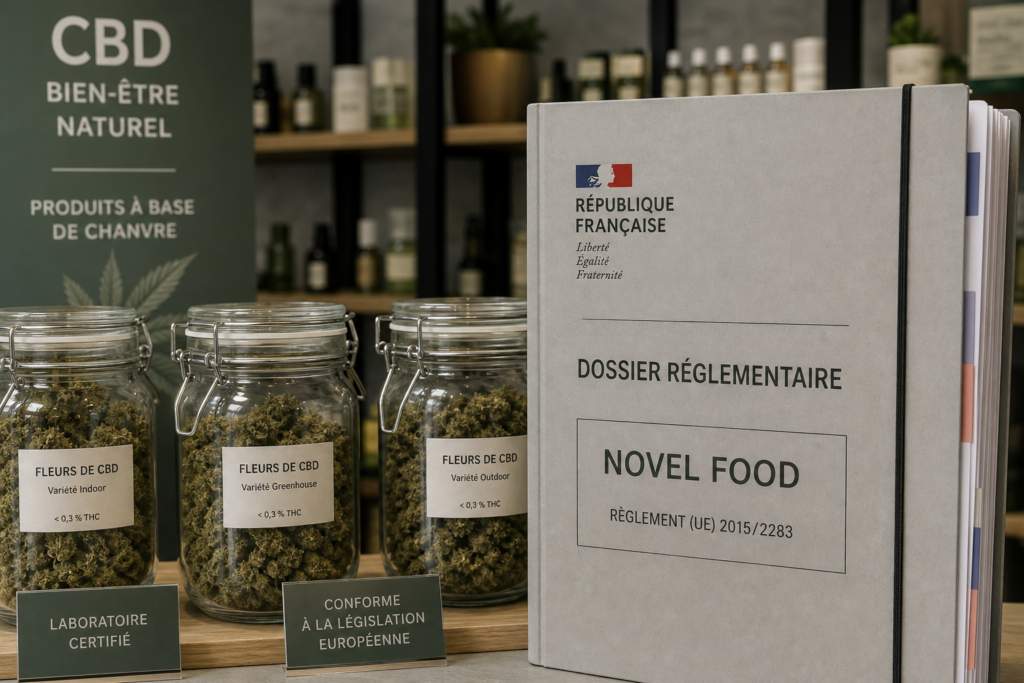
Headlines this spring often said “CBD is banned in France.” That overstates the DGAL national control plan. The food directorate is enforcing Regulation (EU) 2015/2283 on novel foods against cannabinoid foods and supplements: oils, gummies, drinks and similar ingestibles sold as food.
Trade reporting in early July confirmed industry groups are challenging those food controls in court. Separately, sector analysis from 2 July 2026 argues the crackdown is category-specific, not a blanket CBD wipeout.
Dried hemp flower is treated differently. The European Industrial Hemp Association (EIHA) argues dried flower should not be a novel food because European hemp-flower use predates the 15 May 1997 Novel Food cut-off. That reading is still debated at EU level, but it helps explain why French flower retail is less exposed to the current DGAL food plan than labelled CBD foods.
Looking for lab-tested CBD products that ship across Europe?
Save 10% on verified batch COA CBD oils, capsules, and topicals from Reakiro with exclusive code CBDEU.
Check prices & save 10% at Reakiro →
Affiliate disclosure: We may earn a commission if you buy through our link at no extra cost to you.
What it means for buyers in France
- Edibles and many “CBD oil” supplements: Highest exposure to Novel Food removals and marketplace drops. Treat oral CBD food products as non-authorised until a Commission authorisation says otherwise.
- Dried flower: Still sold in many shops and less targeted by the food plan. It is not risk-free: police confusion, local friction and THC documentation still matter, and France already tried (and lost) a broad flower ban in 2021 before the Conseil d’Etat intervened.
- Cosmetics and topicals: Different product framework again. Do not treat a cream as a substitute for an ingestible.
- “CBD banned” headlines: Usually collapse several product families into one line. Ask which format the seller means before you reorder.
Why flower looks like the “survivor” segment
After the 2021 flower fight, raw flower became one of the more stable French CBD retail categories: better identified by authorities than many processed extracts, and less exposed to rapid Novel Food requalification than manufactured foods.
A second pressure line in 2026 is excise talk around some processed hemp products. Reporting says those fiscal debates focus on manufactured goods and extracts, not crude agricultural flower. That relative gap reinforces shop shifts toward flower when oils and gummies face shelf removals.
Some retailers are also testing non-CBD “CB2” style formats (terpenes, magnolia extract, PEA, geraniol) as adaptation products. Those are marketing responses to regulation, not a Novel Food authorisation for CBD foods.
Context
France’s food crackdown is national Novel Food enforcement, not the same fight as Italy’s Article 18 flower cases or Greece’s draft retail flower ban. Across the EU the pattern is the same for shoppers: product format matters more than a single “is CBD legal?” answer.
Sources
Related guides
Disclaimer: This is news context for shoppers, not legal or medical advice. French CBD rules move through agencies and courts. Check current official guidance before you buy, sell or import CBD products.
FAQ
Did France ban all CBD in 2026?
No. The DGAL plan mainly targets cannabinoid foods and supplements under Novel Food rules. Cosmetics and dried hemp flower sit under different frameworks and are not covered by the same food-control push.
Are CBD flowers safer to buy than CBD oils in France right now?
Flower retail is less targeted by the current Novel Food food plan than labelled ingestible oils and gummies. Flower still needs low-THC paperwork and can create local friction. It is not a medical or legal green light.
Is dried hemp flower a Novel Food in the EU?
EIHA argues dried flower should not be novel food because European use predates 1997. That interpretation is not finally settled EU-wide. France's current DGAL plan still focuses on cannabinoid foods and supplements.